What Is NFT?
The digital world is changing fast, and NFTs—one of the most talked‑about innovations—are at the center of this transformation. You’ve probably heard about NFTs being sold for millions or seen digital artworks trending online. But NFTs are much more than that.
This guide explains what is NFT, how it works, real-life uses, and what the future of NFTs may look like—in simple, human-friendly language.
NFT stands for Non-Fungible Token.
Let’s break that down:
Non-Fungible
Something unique, which cannot be replaced or exchanged one‑to‑one.
Example: A painting, a concert ticket, a rare baseball card.
Token
A digital asset stored on a blockchain—a secure, transparent public ledger.
Therefore: An NFT is a unique digital asset recorded on a blockchain that proves ownership of something—digital or physical.
Unlike cryptocurrency (Bitcoin, Ethereum), NFTs are not identical to each other.
You can think of NFTs as digital certificates of authenticity and ownership.
How Do NFTs Work?
NFTs live on a blockchain (usually Ethereum, Polygon, Solana, etc.) and contain information such as:
- Who owns the asset
- Who created it
- Transaction history
- Metadata (what the NFT represents)
Once an NFT is created (minted), it cannot be duplicated or altered. This makes them secure and ideal for verifying ownership.
What Can Be Turned Into an NFT?
Pretty much anything digital—or tied to the real world—can become an NFT:
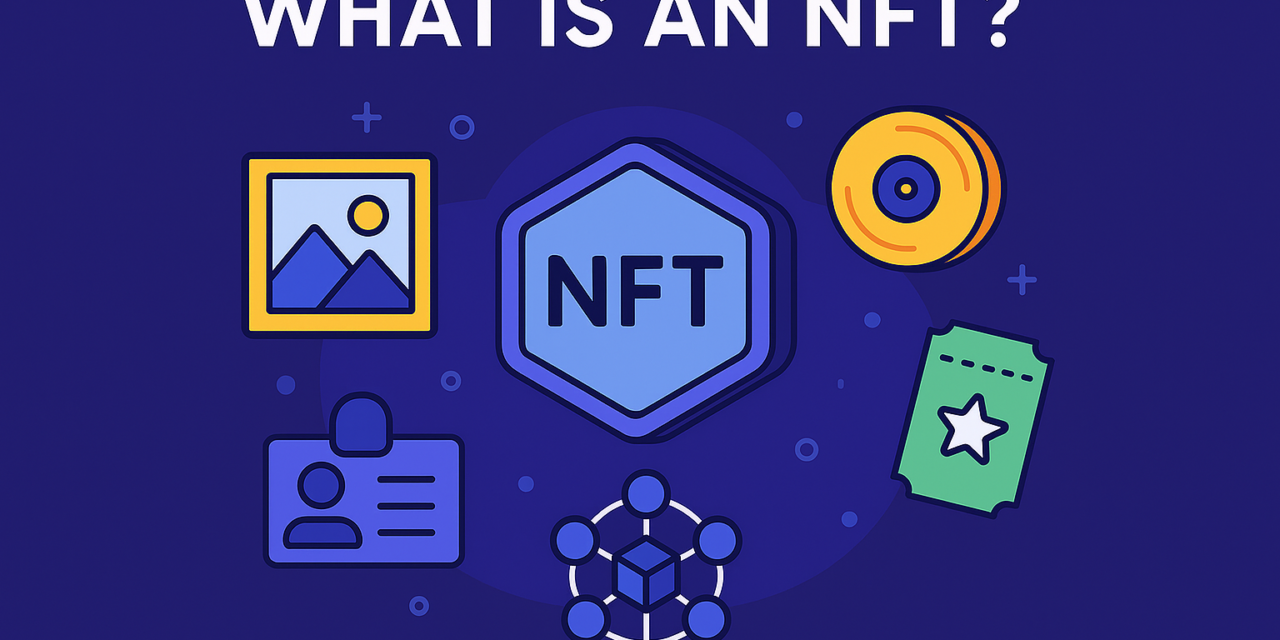
- Digital art
- Music tracks
- Game items
- Domain names
- Videos
- Virtual real estate
- Tickets
- Physical items with blockchain proof
NFTs are reshaping the concept of digital ownership.
Real-Life Uses of NFTs (Beyond Digital Art)
While NFTs became famous for art, their real-world applications are much bigger and more practical.
1. Digital Art & Collectibles
Artists can sell their work without galleries, earning royalties whenever it’s resold.
Benefits:
- Full ownership
- No middlemen
- Global marketplace
2. Music & Entertainment
Musicians can release albums, passes, and exclusive content as NFTs.
Benefits:
- Direct fan-to-artist connection
- Royalty automation
- Exclusive access
3. Gaming Assets (Play-to-Earn Games)
NFTs can represent:
- Characters
- Weapons
- Skins
- Virtual land
Players own their items and can resell them.
4. Digital Identity
NFTs can serve as:
- ID badges
- Verified certificates
- Membership passes
- Reputation tokens
Web3 identity is growing rapidly.
5. Event Tickets
NFT tickets:
- Prevent fraud
- Offer exclusive perks
- Store event history securely
Concerts, sports events, and festivals are exploring NFT tickets.
6. Real Estate & Property Ownership
NFTs can represent:
- Real estate documents
- Land rights
- Rental agreements
This makes ownership transfer faster and safer.
7.Luxury Goods & Fashion
Brands use NFTs for:
- Authenticity verification
- Exclusive digital wearables
- Membership clubs
Example: NFT-linked sneakers or digital handbags.
8. Education & Certification
Degrees, courses, and certificates can be minted as NFTs to prevent forgery.
What Will Be the Future of NFTs?
As technology evolves, NFTs will expand far beyond collectibles. Here’s what the future likely holds:
1. Digital Identity in Web3 & Metaverse
NFTs may become your:
- identity badge
- online passport
- login access to apps and games
You’ll control your identity—not big tech companies.
2. Tokenized Real-World Assets (RWA)
Real estate, cars, leases, or even shares of property can be tokenized as NFTs.
This could:
- remove paperwork
- speed up transactions
- reduce fraud
3. Loyalty Programs & Memberships
Brands will use NFTs for:
- VIP memberships
- reward programs
- exclusive product drops
Imagine an NFT that gives you lifelong discounts.
4. Gaming Economies Will Explode
Gamers will truly own their digital items and trade them across games.
This could create:
- new incomes
- digital jobs
- gaming marketplaces
5. Entertainment & Media Evolution
NFTs will unlock:
- backstage access
- fan rewards
- digital collectibles from movies & shows
Hollywood is already experimenting with NFT ticketing.
6. Enhanced Security & Authentication
NFTs will protect:
- medical records
- official documents
- sensitive data
All stored securely on blockchain.
7. More Utility, Less Hype
The NFT bubble of 2021 taught the world an important lesson: utility matters.
Future NFTs will focus on:
- real-world use
- long-term value
- practical benefits
Final Thoughts
NFTs are much more than digital collectibles—they are part of a major shift toward digital ownership, decentralization, and Web3 identity.
In real life, NFTs will transform:
- how we buy and sell assets
- how artists and creators earn
- how we prove identity
- how we interact online
The future of NFTs is not just about art—it’s about building a smarter, more transparent digital world.
NFTs are here to stay, and their potential is only beginning to unfold.