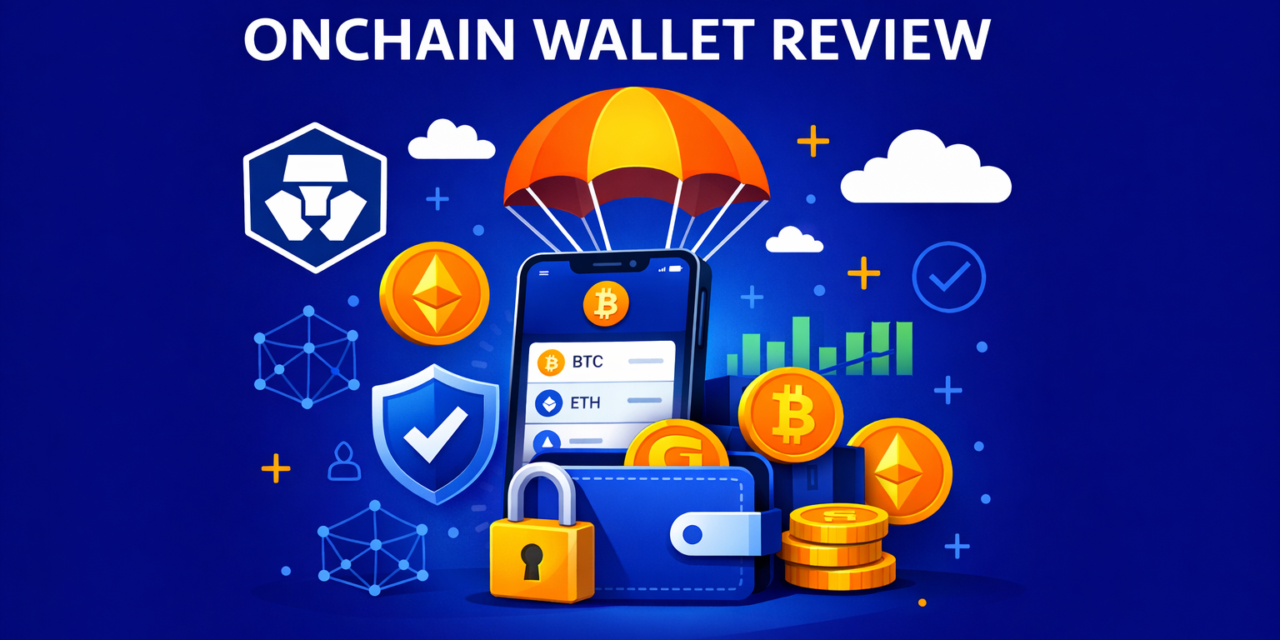
Onchain Wallet Review
Crypto.com’s Onchain Wallet previously known as the “DeFi Wallet” has become one of the most robust multi‑chain non‑custodial wallets heading into 2026. It offers users full control of their private keys, deep Web3 integration, staking options, and wide blockchain support. Unlike the Crypto.com App’s custodial wallet, the Onchain Wallet keeps ownership entirely with the user.
Let’s dive into everything you need to know.
What Is Onchain Wallet?
The Crypto.com Onchain Wallet is a non‑custodial multi‑chain wallet that allows users to store, send, swap, stake, and manage cryptocurrencies while maintaining full control of private keys. Private keys are generated and stored locally on your device, ensuring no third‑party access.
You can use the wallet without:
- A Crypto.com exchange account
- KYC verification
The wallet is available as:
- A mobile app (Android & iOS)
- A browser extension (Chrome, Firefox, Edge)
Supported Blockchains & Assets
Onchain Wallet supports:
- 30+ blockchains including Ethereum, Cronos, Bitcoin, Cosmos, and more
- 1,000+ tokens (with Web3 access for 700+ tokens)
- 100+ coins like BTC, ETH, CRO, LTC, ERC‑20 tokens (per platform listings on G2)
This makes it ideal for multi‑chain investors with diverse portfolios.
Security Features: Is Onchain Wallet Safe?
Security is a major highlight of the Onchain Wallet. It includes:
- Non‑custodial private key control
Keys are generated locally using strong cryptography. Your seed phrase (12/18/24 words) acts as the master recovery key. - Secure Enclave protection & biometric login
Advanced device‑level encryption, plus optional fingerprint/Face ID. - No KYC required
No personal data is tied to your wallet. - 2‑Factor Authentication supported
Enhanced protection through optional 2FA.
Important Note: As a hot wallet, it is as secure as your device. Malware or phishing attacks remain a risk, like any software wallet.
Key Features of Onchain Wallet
- Built‑In dApp Browser & Web3 Access
Interact seamlessly with DeFi protocols, NFT marketplaces, DEXs, and Web3 apps. - Staking & On‑Chain Earnings
Earn rewards on tokens using platforms like Compound, Aave, Yearn Earn V2, Crypto.org Chain, and Cosmos staking.
No lock‑up terms required. - Token Swaps & Perpetual Trading
Supports DeFi token swaps and perpetuals trading within the wallet. - NFT Storage & Management
Store, view, and trade NFTs across supported chains. - Fiat On‑Ramping
Built‑in on‑ramps let you buy tokens using traditional payment methods. - Full Recovery Options
Supports 12/18/24‑word BIP‑39 phrases for importing/exporting wallets.
Pros & Cons
✔️ Pros
- Full ownership of private keys (non-custodial)
- Supports 30+ blockchains and 1,000+ tokens
- Built‑in staking, swapping, and dApp browser
- No KYC required to use the wallet
- Supports NFTs and Web3 protocols natively
❌ Cons
- Can be complex for beginners (due to advanced DeFi features)
- Hot wallet security depends heavily on device safety
- Some features restricted by geographic location (e.g., perpetuals, staking)
- Network fees vary depending on conditions
Who Should Use Onchain Wallet?
Best For:
- Crypto users wanting full control (non-custodial)
- Web3 & DeFi users
- Multi‑chain enthusiasts
- NFT traders
- Users who don’t want KYC
Not Ideal For:
- Complete beginners in crypto
- Long‑term cold‑storage holders (hardware wallets are safer)
- Users who want centralized customer support
Final Verdict: Is Onchain Wallet Worth It in 2026?
Yes, Onchain Wallet remains one of the most advanced yet user-friendly Web3 wallets available in 2026.
It balances security, multi‑chain access, staking, and DeFi features exceptionally well. With full control of your private keys and deep Web3 integration, it’s a powerful choice for crypto-native users.
However, beginners may find the DeFi‑heavy interface overwhelming, and hot wallet risks still apply, making hardware wallets better for long-term holdings.
If you value decentralization, Web3 access, and multi-chain flexibility, Onchain Wallet is absolutely worth considering.