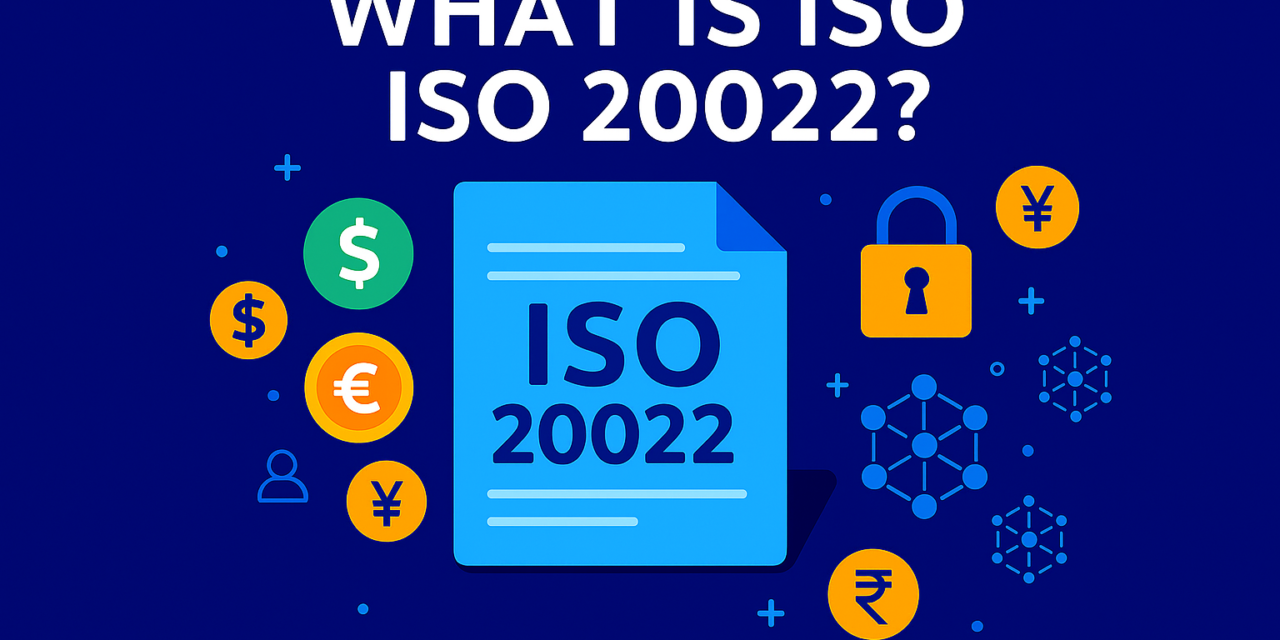
What Is ISO 20022?
The global payments system is undergoing one of its biggest upgrades in decades, and at the center of this transformation is ISO 20022 a modern messaging standard designed to make financial transactions faster, richer in data, and more secure.
As more banks, payment networks, and financial institutions adopt ISO 20022 especially after the end of the SWIFT coexistence period in November 2025 the world is rapidly moving toward a smarter, more interconnected financial ecosystem.
This guide breaks down what is ISO 20022 is, why it matters, and what the future looks like in simple, humanized language.
ISO 20022 is a global standard for financial messaging. It defines how banks and financial institutions exchange payment data.
In simple words: ISO 20022 is the new “language” of global payments richer, structured, and built for the digital era.
It replaces older message formats (like SWIFT MT messages), bringing:
- More detailed transaction data
- Faster processing
- Better security
- Improved interoperability across countries and payment systems
Starting 22 November 2025, SWIFT officially ended support for legacy MT payment messages and moved fully to ISO 20022 formats for cross‑border payments.
Why Was ISO 20022 Created?
The old MT messaging system was created in the 1970s—a time before online banking, AI fraud detection, or instant global transfers. It lacked structure, meaning banks often had to interpret data manually.
ISO 20022 fixes this by enabling:
- Structured data
- Uniform global formatting
- Automation
- Reliability and accuracy
This upgrade is why experts call ISO 20022 a “silent revolution in payments.”
How ISO 20022 Works (in Simple Terms)
ISO 20022 doesn’t replace payment systems it enhances how they talk to each other.
It provides:
- A standardized way to format payment messages
- Rich metadata (purpose codes, invoice details, sender/receiver info)
- Smart structure that computers can process instantly
This helps banks:
- Reduce manual fixes
- Improve compliance checks
- Detect fraud earlier
- Process payments faster
Who Uses ISO 20022?
The standard is being adopted worldwide by:
- SWIFT
- Central banks
- Commercial banks
- Payment processors
- Digital wallets
- Clearing systems
By 2026, almost all major financial jurisdictions are aligned or transitioning.
Real‑Life Use Cases of ISO 20022
ISO 20022 impacts more than just traditional payments.
1. Faster, Clearer International Payments
Banks can now send structured details like tax codes and invoice references, reducing confusion.
This was a major problem under the older MT system.
2. Better Fraud Detection
Rich, structured data helps AI identify suspicious transactions more accurately.
This is one reason banks are accelerating adoption.
3. Seamless Corporate Transactions
Businesses can:
- Automate reconciliation
- Reduce accounting errors
- Improve reporting efficiency
4. Smarter Treasury & FX
With more detailed payment intent and metadata, treasury departments can forecast better and eliminate manual breaks.
5. Interoperable Payment Systems
ISO 20022 lays the foundation for instant cross-border settlements and emerging digital payment rails.
The Future of ISO 20022 (2026 & Beyond)
With the transition completed in late 2025, the next phase focuses on unlocking its full potential.
According to SWIFT and Deutsche Bank analyses:
- 2026 will focus on improving data quality and harmonizing global practices.
- Hybrid addressing, starting November 2026, will reshape the processing chain.
- Banks will shift from basic compliance to using structured payment data for competitive advantage.
The future will bring:
- AI‑driven payment routing
- Instant global payments across multiple rails
- Reduced fraud and compliance risks
- More transparent cross-border transactions
- Integration with digital currencies and tokenized assets
ISO 20022 is not just a “tech upgrade” it’s the foundation of tomorrow’s global financial infrastructure.
Final Thoughts
ISO 20022 is transforming how money moves around the world.
From richer transaction data to faster and safer payments, this new standard is helping build a financial system that is:
- Smarter
- More secure
- More transparent
- Ready for the digital future
Whether you’re a business owner, a fintech developer, or simply curious about modern banking—understanding what is ISO 20022 gives you a front‑row seat to the future of global finance.